From Drab to Fab: A Cape Town Guest House Transformation
Follow the journey of a tired Cape Town guest house as it undergoes a full interior transformation — and how the same principles can work for your property.
The Starting Point
When the owners of a modest guest house in Cape Town's Southern Suburbs approached us, they were candid about the problem. The property had solid bones — generous room sizes, high ceilings, large windows — but its interior had not been updated since the early 2000s. Dark wood veneers, heavy floral curtains, and a colour scheme that oscillated between beige and browner beige gave the space a dated, tired feel. Online reviews were polite but middling. "Clean and comfortable," guests wrote, "but nothing special."
The owners wanted to break out of the middle. They needed a design that would justify higher nightly rates, attract a more discerning clientele, and generate the kind of word-of-mouth that fills calendars without discounting. They gave us a clear brief: transform the guest house into a destination in its own right, without structural changes, and on a budget that would be recouped within eighteen months of improved occupancy.
The Strategy: Light, Edit, Invest
We approached the transformation in three phases. The first was light — both literal and metaphorical. Every room was stripped of heavy window treatments and fitted with sheer linen curtains that flooded the spaces with natural light. The dark wood veneers were painted in a warm off-white, and the walls were refreshed in a soft clay tone that shifted from warm grey to pale terracotta depending on the time of day. The cost was minimal; the effect was immediate and dramatic.
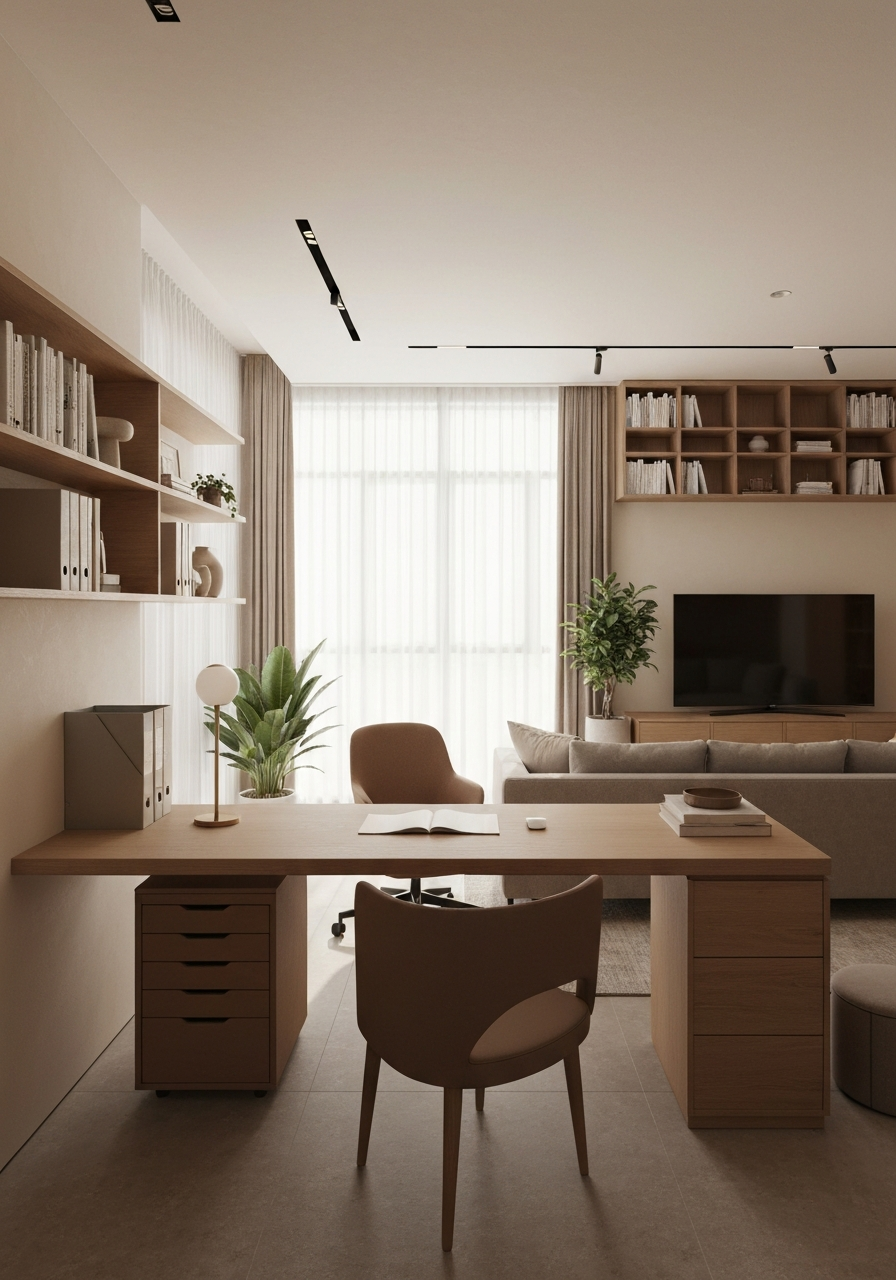
The second phase was editing. The guest house had accumulated a lifetime of miscellaneous furniture — odd chairs, mismatched side tables, decorative objects that served no purpose. We removed everything that did not contribute to comfort, function, or beauty. In each room, we pared back to the essentials: a well-made bed with quality linens, a dedicated workspace with good task lighting, a comfortable armchair with a reading lamp, and a single piece of original art. The emptiness was intentional. In a guest house, space is the luxury.
Investing in the Guest Experience
The third phase was targeted investment. We identified four areas where spending more would yield disproportionate returns: beds, linen, lighting, and bathrooms. The beds were upgraded to hotel-quality mattresses, the linen to high-thread-count Egyptian cotton in plain white (easy to launder, universally appealing), and the lighting to a layered scheme with dimmers in every room.
The bathrooms received the most dramatic upgrades. Instead of expensive full renovations, we regrouted tiles, replaced outdated fixtures with matte-black alternatives, installed rainfall shower heads, and added quality towels and organic toiletries. The total spend per bathroom was under forty thousand shillings, but the effect was a bathroom that felt newly renovated.
The Result
Six months after the transformation, the guest house had increased its average nightly rate by forty percent. Online reviews now consistently mention the design as a highlight. "We booked for the location," one recent guest wrote, "but we will return for the room." The owners have already recouped their investment and are planning to apply the same approach to their second property.
What made the difference was not a big budget or famous architect. It was a clear strategy, disciplined editing, and the willingness to invest where it matters most. The principles apply to any property: let in the light, remove the clutter, and spend your budget on the things guests actually notice. The rest is decoration.